
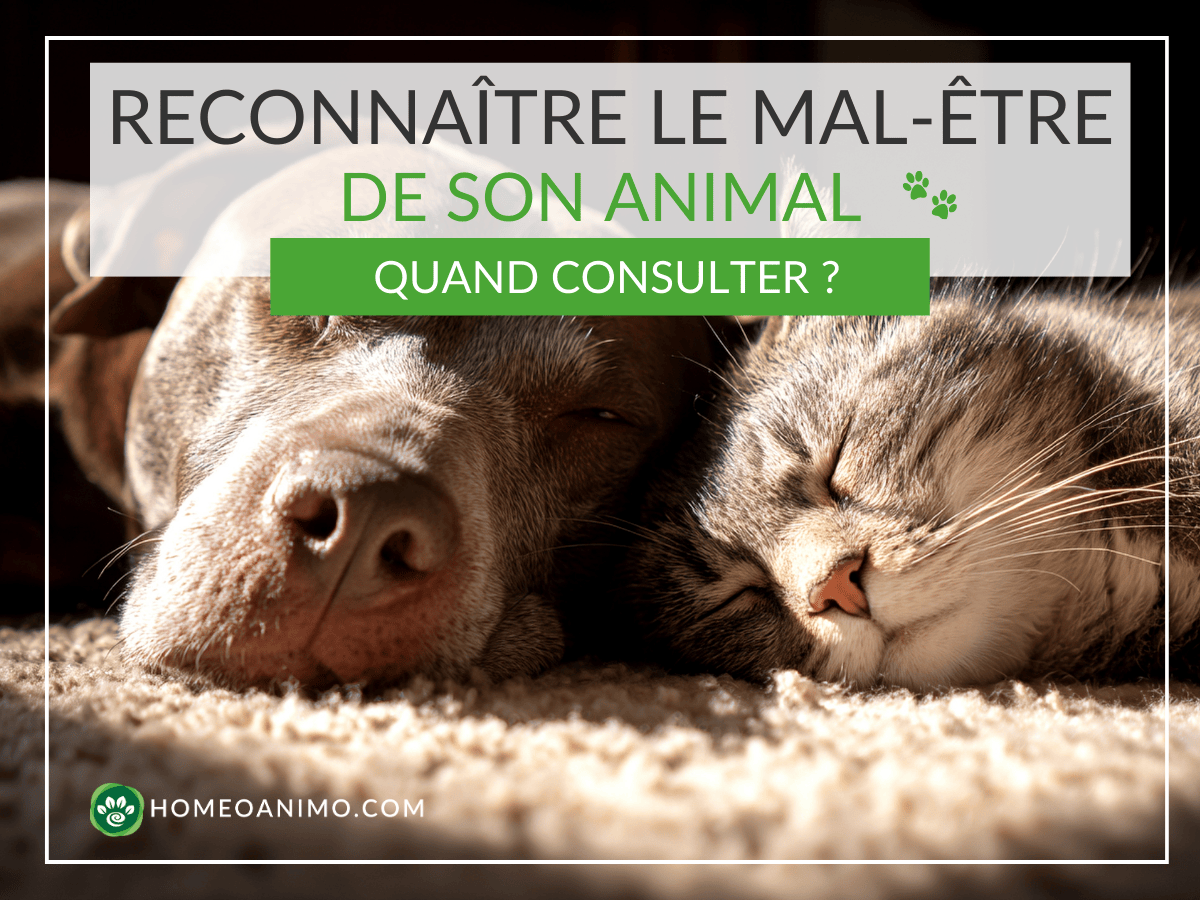
Recognizing your pet's distress: when to consult a veterinarian?
Animals don't speak, but they communicate constantly. A dog that suddenly becomes lethargic, a cat that hides more and more, or a rabbit that ignores its hay: it's sending a message. Understanding these signals allows you to identify pain, stress, or deeper discomfort earlier and take action before the situation worsens.
The good news is that it's possible to learn to read these signs, even subtle ones. At each step, you can be supported by your veterinarian, byveterinary assistants trained in welcoming and observing animals, and by natural solutions to support your pet.
Recognizing signs of distress in your pet is essential for ensuring prompt and appropriate care. Let's explore the main warning signs and the crucial role of the veterinary team.
What are the signs of distress in dogs, cats and other small animals?

The first indicator is always the animal's usual behavior. A very playful dog that becomes calm and distant, a greedy cat that leaves its food bowl almost untouched, or a curious rabbit that isolates itself, all are already sending a signal.
Changes in appetite, isolation, sudden agitation, new aggression, or severely disturbed sleep are among the most common signs of pain. Veterinarians remind us that these behavioral changes are often the most telling.
The body also speaks volumes. Some animals will repeatedly lick or scratch a particular area, adopt a hunched posture, have difficulty climbing stairs, or keep their eyes half-closed with a tense expression. These facial expressions, postures, and difficulties moving are classic signs of pain, even if the animal isn't complaining.
With exotic pets such as rabbits, guinea pigs, hamsters, rats, or gerbils, the situation is even more delicate: they are prey animals, programmed to hide their weakness. A rabbit that stops eating its hay, produces fewer droppings, remains motionless, with a hunched body and ruffled fur, should be taken very seriously. A refusal to eat for just a few hours can already warrant an urgent veterinary consultation.
What should you do when you notice these warning signs?

When faced with a worrying change, many owners hesitate between thinking "it will pass" and fearing the worst. The best approach is to take these signs seriously, observe carefully, and then contact the veterinary team.
It's helpful to note when the change started, whether it's constant or linked to specific situations (meals, handling, the presence of another animal, going outside, noise, etc.), whether the animal is eating and drinking normally, whether it's eliminating as usual, and whether it seems uncomfortable getting up, jumping, or climbing stairs. Filming the animal in the situation that concerns you is often very valuable: the video can be shown to the veterinarian, even if the animal is behaving "normally" at the time of the consultation.
Certain signs warrant promptly calling the clinic: difficulty breathing, a very pale or bluish tongue or gums, seizures, a significant fall, bleeding, a complete refusal to eat or drink, repeated vomiting, acute diarrhea, or, in rabbits and some small mammals, a lack of appetite and droppings. Even more subtle signs , if they persist for several days, warrant an appointment.

How can a veterinary assistant support you?

When you call or arrive at the clinic, your first point of contact is often the veterinary assistant. Her role goes far beyond simply scheduling appointments. She helps you describe what you observe, asks the right questions, identifies signs of severity, and can alert the veterinarian to prioritize treatment if necessary.
Thanks to their training , they can also advise you on how to minimize stress for your pet: how to transport, handle, and settle them in the waiting room or at home after a procedure. A well-trained veterinary assistant is an essential link in animal health and well-being, working directly with the veterinarian and the owner.
A natural solution to help with your pet's stress
In some animals, signs of distress are closely linked to stress: fear of being alone, anxiety in the car, agitation in the presence of loud noises, and distress during veterinary visits. It is always important to first consult a veterinarian to rule out any underlying medical cause.
In addition, homeopathic remedies , Bach flowers for those who are in favor of them can help support anxious or stressed animals, integrated into a global approach that combines veterinary follow-up, adaptation of the environment and respect for the animal's rhythm.
Veterinary teams also rely on international recommendations, such as the WSAVA Global Pain Management Guidelines , which emphasize the importance of assessing pain at each consultation and treating it appropriately.
FAQ - Signs of illness and veterinary consultation
How can I tell if my pet is suffering in silence?
An animal in pain doesn't always show it obviously. It may become calmer or more agitated, change its sleeping habits, eat less, isolate itself, or become irritable when touched. A less alert gaze, a hunched posture, or difficulty moving are important indicators. If anything seems unusual, it's best to consult your veterinarian.
When should I seek emergency medical attention?
You must call a clinic immediately if your pet is having difficulty breathing, has blue or very pale gums, collapses, has seizures, bleeds heavily, stops drinking or eating, vomits repeatedly, or suffers from severe diarrhea, especially in young animals. In rabbits and some small mammals, not eating or defecating for just a few hours warrants an emergency consultation.
Conclusion
Dogs, cats, and other small animals don't speak our language, but they clearly express their distress through changes in habits, posture, gaze, and behavior. Learning to recognize these signals, knowing when to consult a veterinarian, and relying on a well-trained veterinary team—veterinarians and veterinary assistants—are essential steps in providing them with a longer, more comfortable, and more peaceful life.
If you're concerned that your pet might be suffering from a health problem, our Free Pet Health Consultation can help. In addition to receiving advice and recommendations from our Natural Health Consultants, they will also guide you through the products and treatment options best suited to your pet's health needs.
External sources

 DV Dorine Olejnik





Leave a comment
This site is protected by hCaptcha and the hCaptcha Privacy Policy and Terms of Service apply.