
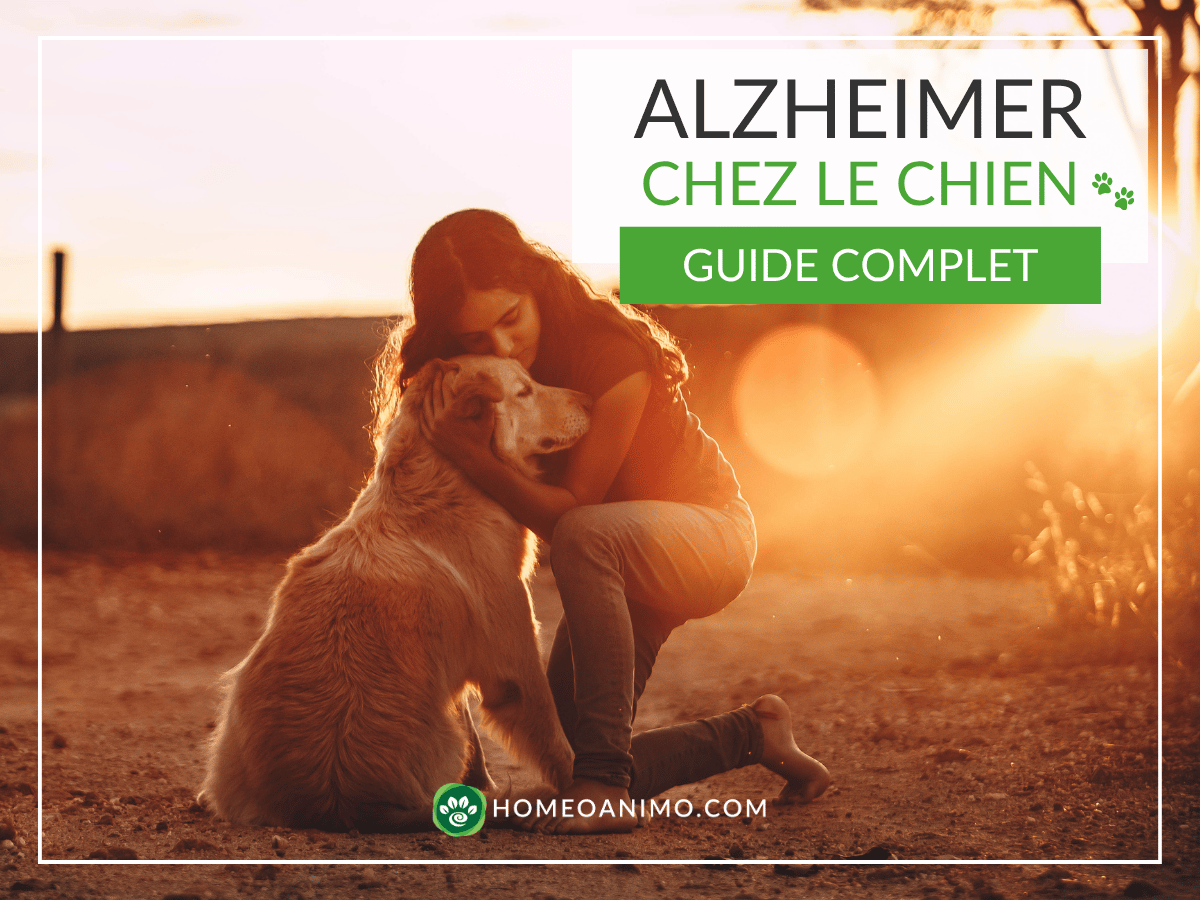
Canine Alzheimer's: Signs, Causes, and Natural Solutions to Support Your Dog
Watching your dog grow old is a privilege, but seeing their mind wander is one of the most heartbreaking experiences for a pet owner. Does your dog stare at the wall? Do they seem lost in the house or sometimes no longer recognize you? Canine Cognitive Dysfunction Syndrome, often called dog Alzheimer's, disrupts the daily lives of many families.
Click to learn more: 👉 Help your dog regain mental clarity with our natural remedy CORDYANIMO 🐶
Living with a dog affected by this disease requires infinite patience, love, and above all, understanding. In this comprehensive guide, we explore what canine cognitive dysfunction is, how to recognize it, and most importantly, how to naturally support your old companion's brain health to preserve their quality of life.
What is Dog Alzheimer's (Canine Cognitive Dysfunction)?
Canine Cognitive Dysfunction Syndrome (CCDS) is the canine equivalent of Alzheimer's disease in humans. It is an age-related neurodegenerative disease that leads to a decline in cognitive functions: memory, learning, perception, and environmental awareness.
It's not just a normal part of "aging." The brain undergoes real physical changes, including the accumulation of beta-amyloid protein plaques, which disrupt nerve signal transmission. As an owner, it's crucial to understand that your dog isn't intentionally changing their behavior; their brain simply isn't processing information the same way anymore.
Moreover, as highlighted by the American Kennel Club, 28% of dogs aged 11 to 12 years show at least one sign of cognitive decline, and this figure rises to 68% in dogs aged 15 and over.
What signs and symptoms should you watch for?

In veterinary medicine, the acronym DISHAA is often used to categorize the symptoms of dementia in dogs. If you live with an aging dog, these signs may be familiar to you:
- D - Disorientation: Getting lost in familiar places, getting stuck behind doors, or staring blankly at walls.
- I - Interactions (social): Becoming distant, irritable, or conversely, extremely clingy. They may no longer greet family members as before.
- S - Sleep (cycle alteration): Sleeping all day but wandering, whining, or barking in the middle of the night (inversion of the sleep-wake cycle).
- H - House-soiling (cleanliness): Urinating or defecating indoors, forgetting their training, or no longer signaling the need to go outside.
- A - Activity: Decreased exploration or repetitive movements (like pacing in circles).
- A - Anxiety: Developing new fears, excessive attachment (becoming very "needy"), nervousness, or increased vocalizations without apparent reason.
What causes this degeneration?
Although age is the main factor (often affecting dogs over 9 to 11 years old), the exact causes are complex. They include:
- Accumulation of toxic senile plaques (beta-amyloids) for neurons.
- Oxidative stress: free radicals damage brain cells over the years.
- Reduced blood circulation to the brain, decreasing the supply of essential oxygen and nutrients.
How to manage daily life and the home?

Managing a dog with Alzheimer's requires adapting their environment to reduce anxiety:
- Maintain a strict routine: Meals, walks, and bedtime at the same hours.
- Secure the environment: Do not move furniture. Block staircases to prevent falls.
- Gentle enrichment: Continue to stimulate them with very simple scent games or short exploratory walks to engage their brain without exhausting them.

How to naturally support their brain?

There is no miracle cure for cognitive dysfunction, but natural remedies can slow the progression of the disease and significantly improve your dog's quality of life:
1) ANTIOXIDANTS AND OMEGA-3: Cellular protection
The brain is very vulnerable to oxidative damage. Adding antioxidants and Omega-3 fatty acids (DHA/EPA) helps reduce brain inflammation and promotes the fluidity of nerve cell membranes.
2) PURE MCT OIL (derived from coconut oil): Alternative energy
The aging dog brain sometimes struggles to metabolize glucose. Medium-Chain Triglyceride (MCT) oil provides ketones, an alternative source of fast and efficient energy that can greatly help improve cognitive functions.
3) GINKGO BILOBA: Microcirculation
Ginkgo biloba is a plant known for its antioxidant properties and its ability to stimulate blood circulation in the brain.
*Important warning: As demonstrated by the Veterinary Sciences study, the use of ginkgo biloba is not recommended for dogs with a history of seizures, those suffering from bleeding disorders (risk of bleeding), or those taking non-steroidal anti-inflammatory drugs (NSAIDs) or anticoagulants.
4) MEDICINAL MUSHROOMS: Brain oxygenation
Nature offers us powerful allies. Certain mushrooms, like Cordyceps, are renowned for improving blood circulation and tissue oxygenation, including the brain. They also act as adaptogens, helping the aging body better manage cellular stress and fatigue.
A natural remedy for your dog

Support your dog's cognitive health with CORDYANIMO
Our adaptogenic natural product CordyAnimo is specially formulated to support the vital functions of aging animals.
- Improves cellular oxygenation and blood circulation to the brain
- Fights age-related fatigue and lethargy
- Supports the immune system and overall organ functions
EXPERIENCE
Michèle
⭐ ⭐ ⭐ ⭐ ⭐
"Absolutely brilliant. Homeoanimo remedies help improve the health of my little Jade when she was condemned by traditional medicine. Huge improvement in four weeks with an attack treatment, including CordyAnimo. A big bravo and all my consideration for Homeoanimo."
FAQ - Your common questions
Can my dog die from canine Alzheimer's?
Cognitive dysfunction syndrome is generally not fatal in itself, but it degrades the quality of life. It is often the complications related to old age or an unacceptable quality of life that lead to difficult decisions with the veterinarian.
Is it possible to prevent the disease?
While aging cannot be stopped, a diet rich in antioxidants, early mental stimulation, and regular exercise throughout the dog's life can help delay the onset of symptoms.
Why does my dog stare at the walls?
This is a symptom of profound disorientation. Your dog's brain can no longer process its spatial environment, making them feel "lost" even in familiar places.
Conclusion: Accompanying with dignity
Living with a dog with cognitive dysfunction is a real emotional challenge. Sleepless nights and blank stares are hard to bear, but every moment of clarity and tenderness is worth fighting for. By understanding the disease, adapting their environment, and supporting their metabolism with gentle natural solutions like Cordyceps, you can help them age with dignity.
If you need help navigating this period and choosing the best natural supports for your old companion, our experts are here to listen:
Need personalized support?
Get my free recommendationSources and References
To deepen your knowledge on cognitive aging in dogs, here are reliable references:
- American Kennel Club (AKC) - Dementia in Dogs: Signs, Symptoms, and Treatments
- Veterinary Sciences - Effects of Gingko biloba and Milk Thistle Extracts on Biomarkers of Antioxidants Status and Liver Function in Healthy Dogs
- Frontiers in Nutrition - Efficacy of a Therapeutic Diet on Dogs With Signs of Cognitive Dysfunction Syndrome (CDS): A Prospective Double Blinded Placebo Controlled Clinical Study

 Denyse Lessard


Leave a comment
This site is protected by hCaptcha and the hCaptcha Privacy Policy and Terms of Service apply.