
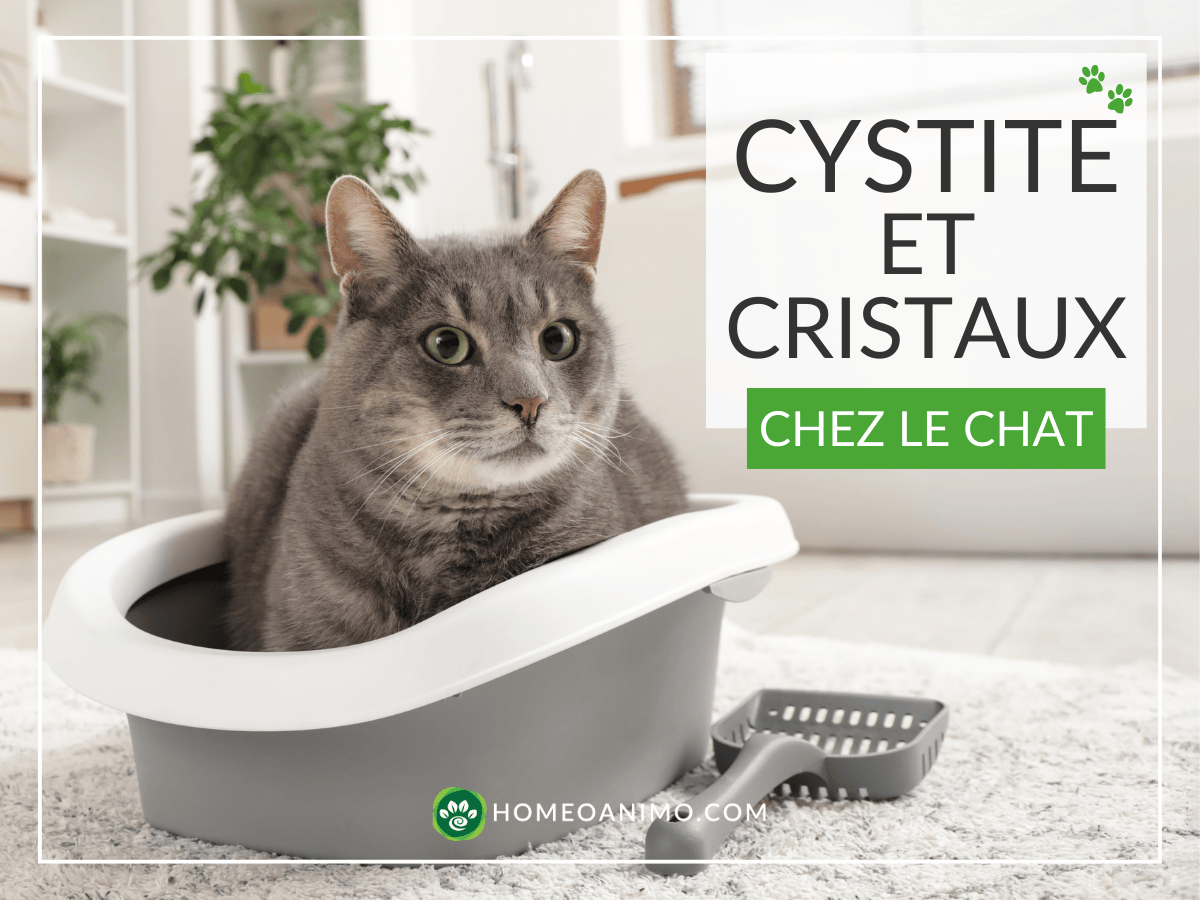
Cystitis and crystals in cats: 5 natural remedies and expert advice 2026
Urinary tract infections in cats are one of the most common reasons for veterinary visits. Whether it's cystitis , crystals , or kidney stones , these conditions cause intense pain for our feline friends and great worry for their owners. As a devoted cat parent, understanding how to identify the signs and how to relieve your companion's discomfort with natural treatments is essential for a lasting recovery.
Click to learn more: 👉 Relieve your cat's URINARY TRACT INFECTION with our NATURAL product 🐱
But don't worry, because for every urinary challenge, there is a gentle and effective approach. At HomeoAnimo™, we are also passionate about animals. We are committed to using our decades of knowledge and experience in holistic animal health to help you manage your pet's health issues.
What is a urinary tract infection in cats?
Urinary tract infections in cats , often grouped under the term Feline Lower Urinary Tract Disease (FLUTD), refer to any condition affecting the bladder or urethra. Unlike in humans, the infection is not always bacterial. According to the Cornell Feline Health Center , it is often referred to as idiopathic cystitis (inflammation without an apparent cause) or the presence of urinary crystals that irritate the bladder walls.
What are the causes of urinary problems in cats?
Several factors can trigger a urinary crisis:
- Urinary stones and crystals : The most common are struvite and calcium oxalate. According to the MSD Veterinary Manual , these sediments act like "sand" or stones that can obstruct the passage of urine.
- Stress : Cats are sensitive animals. Moving house or a new arrival can cause bladder inflammation.
- Diet : Food that is too dry (kibble only) without sufficient hydration increases urine concentration and promotes kidney stones.
- Lack of water : A cat that does not drink enough is more at risk of developing urinary sediment.
What are the signs and symptoms to watch out for?

Learning to decode your cat's language is vital. Here are the classic symptoms listed by the experts at VCA Animal Hospitals to identify a urinary tract infection :
- Dysuria : Your cat strains to urinate but only produces a few drops.
- Hematuria : Presence of blood in the urine.
- Inappropriate hygiene : He suddenly urinates on the bed, sofa, or carpets.
- Vocalizations : He meows in pain in his litter box.
- Excessive licking : He frantically licks his genital area.
When should you consult a veterinarian in an emergency?
Warning! If your cat (especially a male) tries to urinate and nothing comes out, it's a urinary obstruction . This is an absolute life-threatening emergency. Without intervention within 24 to 48 hours, toxins will build up in the blood, which can lead to fatal kidney failure.
Is a treatment from a pharmacy effective?
Conventional over-the-counter antibiotics are only effective if the infection is bacterial (which accounts for only 5 to 15% of cases in young cats). For inflammatory cystitis, anti-inflammatories are often prescribed, but they can have side effects on already weakened kidneys.

What are some natural remedies for urinary tract infections in cats?

Many owners seek home remedies or traditional remedies to relieve their cat's urinary tract infections. While natural medicine can be powerful, it must be used wisely.
1) The importance of hydration
The best natural treatment is to dilute the urine. The cat is a "desert animal," it drinks little and its urine is very concentrated. This is the perfect environment for crystals.
Switch to a wet food diet (pâté) and install a water fountain. The more diluted the urine, the less likely crystals are to clump together.
|
💡 BONUS TIP |
| You can even add a little warm water to his food to create a "soup"! |
2) Apple cider vinegar
Often cited as A traditional remedy, apple cider vinegar can help balance urinary pH. However, you must be very careful with the dosage (a few drops diluted) because its acidic taste may put the cat off.
3) Cranberry (D-Mannose)
For infections, we love D-Mannose . It's a natural sugar (from cranberries) used as a home remedy, which acts like a magnet: bacteria stick to it and are expelled directly with the urine!
How to give it? It's often found in powder form. Simply mix a small pinch (about 250 mg) twice a day into their food. It's almost tasteless, so it's very easy to get them to accept!
If you prefer cranberry juice , be careful! Choose pure, unsweetened cranberry juice. Cranberries are excellent for prevention, but less effective once kidney stones have already formed.
Give only a few milliliters per day. In excessive quantities, the fruit's natural sugar can contribute to weight gain and diabetes.
4) Nettle: an effective drainage
Nettle is a powerful natural remedy for the urinary tract. It has diuretic properties that promote bladder flushing and help prevent the formation of crystals.
It also contains essential minerals that support overall kidney function. Whether enjoyed as a cooled herbal tea or taken as a supplement, it helps to gently cleanse the urinary system.
5) Stress management
Stress is the number one trigger for cystitis in cats. Keep their environment calm and their litter boxes always clean.
What is the best natural solution for my cat?

For comprehensive action on pain, inflammation and sediment dissolution, we recommend a proven holistic approach.
VessAnimo (Urinary Disorders) is highly valued for restoring balance to urinary tract infections in our feline companions. Furthermore, it manages the pain caused by bladder inflammation and even dissolves urinary crystals.
It is suitable for animals (dogs, cats, rabbits, horses, etc.) suffering from mild urinary disorders.
It is designed to soothe the bladder without stressing the body. Unlike a simple home remedy, it is a precise formula that targets both the symptoms and the cause.
Personal Experience
Nathalie
★★★★★
I couldn't believe it!
Poofy was suffering from urinary problems, blood in his urine, pain, fever, etc. I saw two vets, antibiotics, antispasmodics, etc. Every time we stopped the treatment, the pain returned.
I must admit that when I contacted you, I didn't believe in homeopathy at all, but I was terrified of losing my beautiful Poofy. I had to admit that it worked because just three days later, Poofy was no longer suffering, everything was back to normal. I couldn't believe it!
Watch our video
FAQ - Your questions about urinary health
Is a urinary tract infection in cats contagious?
No, it is not contagious to other animals or to humans.
Is it safe to give cranberry juice to a cat?
As mentioned, pure juice is very acidic and often full of sugar. Opt for standardized extracts specifically designed for animals.
My cat is peeing everywhere, is this a behavioral issue?
Before assuming a behavioral problem, always rule out medical causes. Cystitis is the number one cause of sudden incontinence.
Conclusion
Urinary tract infections in cats require constant attention. By combining optimal hydration, stress reduction, and appropriate natural treatment , you can break the cycle of recurrence. Remember that early detection of crystals and cystitis is key to preventing serious complications.
Need specific advice? Our Free Animal Health Recommendation is here to guide you towards the best natural remedy.

 Denyse Lessard







Leave a comment
This site is protected by hCaptcha and the hCaptcha Privacy Policy and Terms of Service apply.