
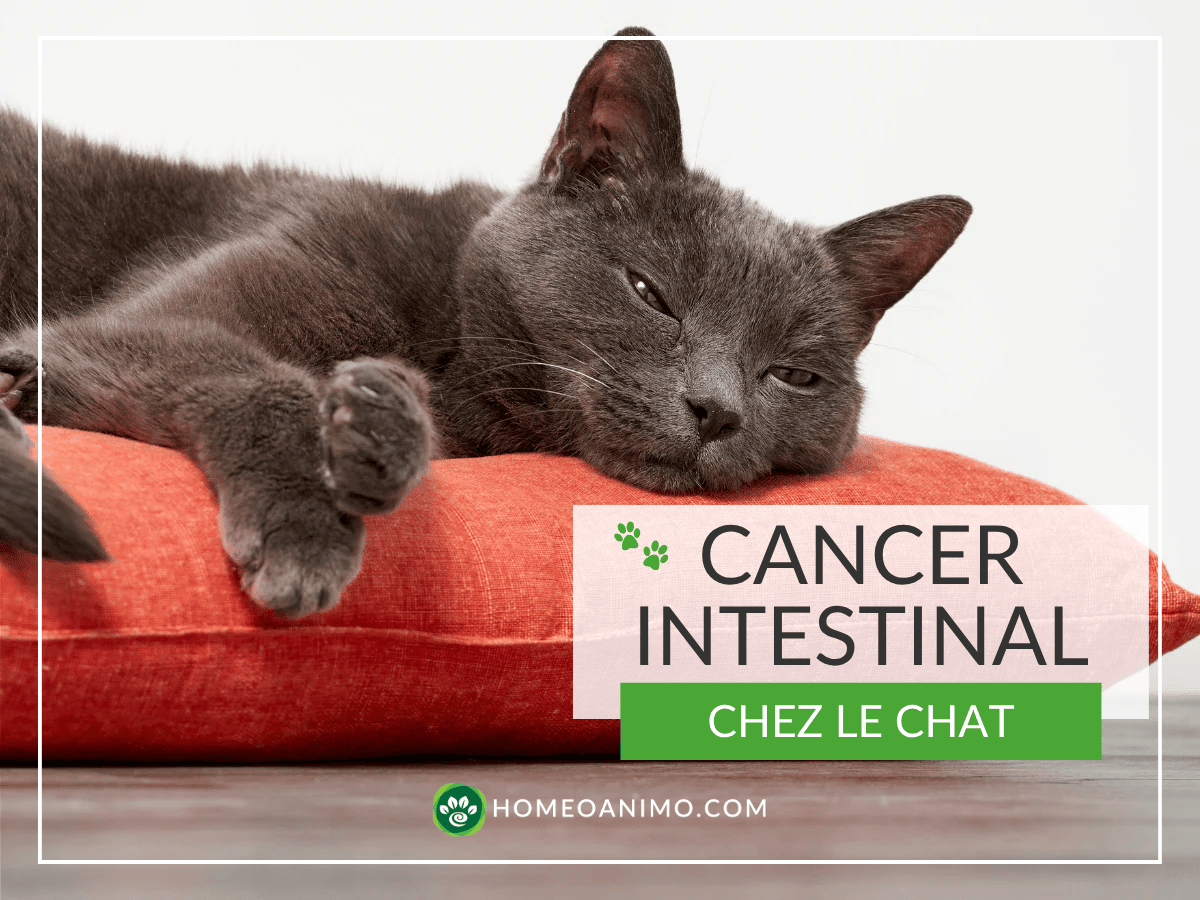
It's heartbreaking to see your pet suffering from an illness, especially if that illness is cancer. If you suspect your cat has intestinal cancer or have recently received such a diagnosis, my heart goes out to you during this difficult time!
Click to learn more: 👉 Support your cat fighting intestinal CANCER with our NATURAL product 🐱
At HomeoAnimo™, we care about you and your pet, and we are committed to using our knowledge and extensive experience in the pet health industry to help pet owners, such as you, manage their pet's health issues, even cancer.
In this article, we will address some frequently asked questions about intestinal cancer in cats , such as its causes and symptoms. We will also discuss available alternatives.
Summary
- 1. What is Intestinal Cancer in Cats?
- 2. What are the causes and risk factors of bowel cancer?
- 3. What are the signs of bowel cancer to watch for?
- 4. What is the diagnosis, prognosis, and life expectancy?
- 5. What are the conventional treatment options for bowel cancer?
- 6. What is the benefit of natural and complementary support?
- 7. What role does nutrition play in supporting a cat with cancer?
- 8. Frequently Asked Questions (FAQ)
- 9. Conclusion
- 10. External Sources and References
1. What is Intestinal Cancer in Cats?

Various cancers can affect a cat's digestive tract or intestines (small and large intestine). These are also referred to as gastrointestinal cancer , bowel cancer , or colon cancer .
What are the most common types of intestinal tumors in cats?
As with any tumor, they can be either benign (non-cancerous) or malignant (cancerous and frequently spreading). Unfortunately, in cats, most intestinal tumors are malignant.
In cats, the majority of intestinal tumors are lymphomas (lymphosarcomas) and are located in the small intestine. Other types of malignant tumors can affect the intestine:
- Adenocarcinomas: Tumors that form from glandular cells.
- Mast cell tumors.
- Leiomyosarcomas.
2. What are the causes and risk factors of bowel cancer?

Although we cannot pinpoint a single cause for the development of cancer, we do know that age, sex, and breed can be risk factors for some feline digestive tract cancers .
Do age, race, and sex increase the risk?
- Age: As a general rule, intestinal cancer is diagnosed more frequently in cats aged 10 to 12 years.
- Sex: Male cats are observed to develop intestinal cancer more often than female cats.
- Breed: Siamese cats are a breed more likely to receive a diagnosis of adenocarcinoma (up to 8 times more than other breeds).
3. What are the signs of bowel cancer to watch for?
How can you tell if your cat has intestinal cancer? Some signs of intestinal cancer in cats to watch for include digestive symptoms and a decline in overall health:
- Vomiting: Can be chronic and sometimes contain blood.
- Decreased appetite and weight loss: Weight loss in cats with cancer , even with an initially preserved appetite, is an important warning sign.
- Diarrhea: May also contain blood.
- Difficulty defecating (tenesmus) or a noticeable change in stool consistency.
- Lethargy and fatigue.
It is important to note that these symptoms can also be a sign of Inflammatory Bowel Disease (IBD) , hence the need for an accurate veterinary diagnosis.
4. What is the diagnosis, prognosis, and life expectancy?

What is the life expectancy of a cat with intestinal cancer?
The life expectancy of a cat diagnosed with intestinal cancer varies greatly. It can range from a few weeks to 2 years, depending on its location, the type and size of the tumor, and whether it has already spread (metastasized).
If the tumor has already metastasized, the average survival time is generally a few months after surgical treatment. However, improvements in treatments and nutritional support can prolong quality of life.

5. What are the conventional treatment options for bowel cancer?
How is bowel cancer treated (Surgery, Chemotherapy)?
If your cat has been diagnosed with gastrointestinal cancer, your veterinarian may recommend:
- Surgical intervention: Often the first step to remove the tumor mass, when possible.
- Chemotherapy: Particularly effective against intestinal lymphoma.
Is chemotherapy well tolerated by cats?
Unlike human chemotherapy, veterinary chemotherapy is generally better tolerated and primarily focuses on quality of life. Protocols are often adjusted to minimize side effects. Cats may experience nausea, decreased appetite, or a temporary drop in white blood cell count, but severe side effects (intense vomiting, complete hair loss) are rare in feline protocols. Treatment for feline lymphoma is often based on these protocols.
6. What is the benefit of natural and complementary support?

Many pet owners are looking for natural options to boost their cat's immune system alongside conventional treatment. The main goal is to support your cat's body during this difficult time and help them fight the illness and any potential relapses.
What support can PiptoAnimo provide?
Our PiptoAnimo product (cancer & tumor support) , based on the Piptoporus Betulini mushroom, is specifically recognized for its immune-supporting properties and can be used:
- To maintain the body's health in cases of cancer and tumors.
- As a complement to conventional treatments, even for long-term use.
It is important to emphasize that natural support is a complementary approach and not a substitute for conventional veterinary treatments.
Personal Experience
Magali
★ ★ ★ ★ ★
" On the advice of my vet, my 14-year-old dog Praline has a mast cell tumor and liver metastases… Too old for chemotherapy, this treatment is truly effective. My dog is doing much better, has a good appetite, far fewer stomach problems, and goes for her two walks a day… I have hope again! THANK YOU !
7. What role does nutrition play in supporting a cat with cancer?

Nutrition is a cornerstone of care for cats with intestinal cancer , aiming to combat cachexia (loss of muscle and fat mass) and reduce systemic inflammation. As research on the nutritional management of cancer in animals indicates, dietary adjustments are crucial.
How can I adapt my cat's diet to limit the progression of cancer?
The goal is to provide a high-calorie and nutrient-dense diet, limiting the energy sources favored by tumor cells:
- High Quality Proteins: The intake must be high in highly digestible proteins to maintain muscle mass (prevent cachexia), essential for the survival and quality of life of the cat.
- Carbohydrate limitation: Simple carbohydrates (cereals, sugars) should be minimized, as they can serve as a quick energy source for cancer cells.
- Omega-3 Fatty Acids: The addition of fish oil (rich in EPA and DHA) is highly recommended for its powerful anti-inflammatory effects, helping to modulate the immune response.
8. Frequently Asked Questions (FAQ)
What is the prognosis between small cell lymphoma and large cell lymphoma?
It is essential to distinguish between these two forms of intestinal lymphoma:
- Small Cell Lymphoma: It is often associated with a better prognosis and responds very well to oral chemotherapy, allowing for a longer median life expectancy (often one year or more). Accurate differential diagnosis is crucial.
- Large Cell Lymphoma: This form is more aggressive. The prognosis is generally more guarded, requiring more intensive chemotherapy protocols and sometimes surgery.
Can we relieve the suffering of an elderly cat with bowel cancer, even with a limited prognosis?
Absolutely. When the goal is comfort (palliative care), you can significantly improve their quality of life. The focus should be on:
- Pain management: Ensure the cat receives the appropriate pain medication (discuss this with your veterinarian).
- Digestive support: Use supplements (such as a high-quality probiotic) to minimize nausea, vomiting, and diarrhea.
- Nutrition: Offer very appetizing meals (heated food, favorite ingredients) to maintain sufficient calorie intake.
Can intestinal cancer be confused with IBD (Inflammatory Bowel Disease)?
Yes. The symptoms of IBD (vomiting, chronic diarrhea, weight loss) are very similar to those of small cell intestinal lymphoma. Differential diagnosis is essential and often requires blood tests, ultrasounds, and ideally a biopsy or specialized genetic testing (such as PARR analysis) to distinguish inflammation from cancer.
9. Conclusion
A diagnosis of feline intestinal tumor is a difficult one, but by working closely with your veterinary team and taking a holistic approach (immune support with natural products like PiptoAnimo , optimized nutrition, and pain management), you give your cat every possible chance to maintain an excellent quality of life, even in the face of illness.
If you're concerned that your pet might be suffering from a health problem, our Free Pet Health Recommendation can help. In addition to receiving advice and recommendations from our Natural Health Consultants, they will also guide you through the products and treatment options best suited to your pet's health needs.
10. External Sources and References
- Feline Lymphoma - Veterinary Partner.
- Inflammatory Bowel Disease (IBD)
- Nutritional management of cancer in dogs and cats.
- Lymphoma in Cats - Cornell Feline Health Center.







2 comments
Merci pour votre commentaire. Je suis désolée d’apprendre la situation de votre chatte. Nous sommes plus qu’heureux de vous offrir notre aide. Je viens de vous envoyer un courriel en réponse à votre message. Merci !
Homéoanimo
Franchement le vétérinaire m’a dit que mon chat avait un cancer de l’intestin, mais comme elle a 13 ans, il m’a donne toi de la cortisone. Elle vomit souvent à la diarrhée et elle est fatiguée mais je l’adore et j’aimerais un peu la soulager car elle me dit qu’elle n’a plus que quelques semaines ou quelques mois. Avez-vous des conseils ?
Combe
Leave a comment
This site is protected by hCaptcha and the hCaptcha Privacy Policy and Terms of Service apply.