
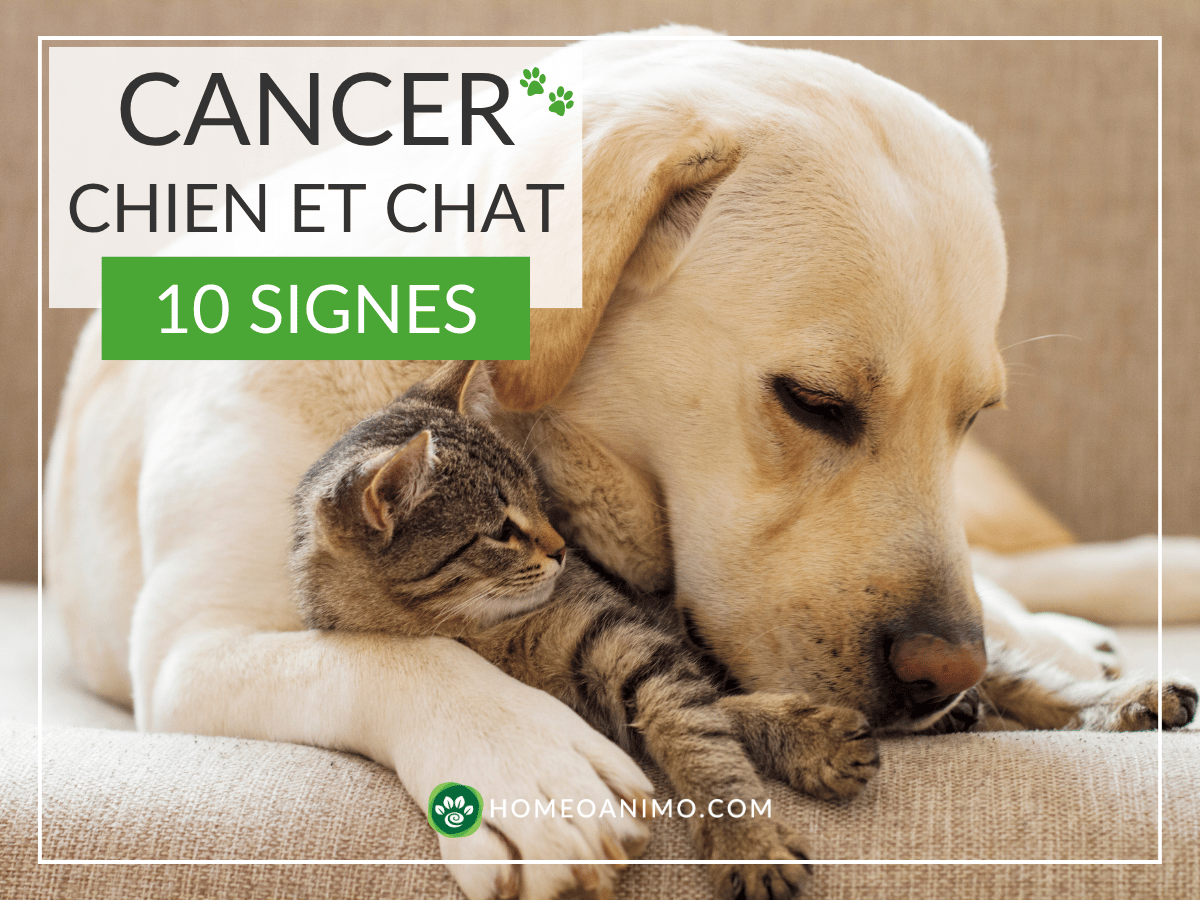
The word "cancer" is one of the most dreaded words to hear from your veterinarian. Whether it's your loyal dog or beloved cat, learning or suspecting they have a tumor is a huge shock for any pet parent. At HomeoAnimo™, we understand this deep distress, the lump in your throat, and the rush of questions. Our mission is to inform, educate, and kindly support you through this ordeal.
Unfortunately, cancer affects a growing number of our four-legged companions. However, contrary to popular belief, early detection remains the cornerstone for significantly improving your pet's life expectancy, comfort, and chances of remission. By learning to recognize certain major clinical warning signs, you become their best health ally.
In this article, we will review the ten warning signs you should never ignore and how veterinary diagnosis is organized.
If you are looking for in-depth information about a specific animal, please consult our detailed guides: the comprehensive guide to dog cancer as well as the comprehensive guide to cat cancer.
Summary
- 1. Why is early cancer detection crucial?
- 2. What are the 10 warning signs of cancer not to be overlooked?
- 3. How is cancer diagnosed in dogs and cats?
- 4. Watch our video
- 5. Frequently Asked Questions (FAQ)
- 6. Conclusion
- 7. External sources and references
1. Why is early cancer detection crucial?

According to the authoritative veterinary association AVMA (American Veterinary Medical Association), cancer is responsible for nearly half of deaths in pets over ten years of age. However, a diagnosis made at the very first clinical symptoms allows for rapid action. This opens up a much wider range of therapeutic options and significantly improves the long-term prognosis. By learning to closely monitor your companion's behavioral and physical changes, you greatly optimize their chances of a happy and comfortable life by your side.
2. What are the 10 warning signs of cancer not to be overlooked?

Clinical manifestations vary greatly depending on the location and stage of the tumor. Nevertheless, the analysis of data from VCA Animal Hospitals and Veterinary Partner highlights ten essential general warning signs to keep in mind.
1. Unexplained weight loss and decreased appetite
If you haven't made any changes to your pet's diet or physical activity level and they start to lose weight, this should alert you. According to experts at PetMD, a prolonged loss of interest in their food bowl (anorexia) is a recurring systemic symptom in many cancerous pathologies, as tumor development deeply disrupts metabolism. Regularly weigh your companion if you notice they are snubbing their food for more than 48 hours. If the situation persists, your veterinarian will then have tangible evidence of the problem, which will help them make a better diagnosis.
2. Appearance of persistent lumps or swellings
This is by far the most obvious and easy-to-detect sign by touch during your regular moments of bonding and petting. A cutaneous or subcutaneous mass that appears suddenly, grows week by week, or does not resorb must imperatively be checked. Fortunately, not all lumps are cancerous: they are frequently cysts, abscesses, or lipomas (benign fatty lumps). However, only a histological analysis in a clinic can definitively confirm this.
3. Chronic skin problems and wounds that do not heal
Pets can get superficial injuries playing outside. However, if you observe a persistent skin wound, scab, or lesion that does not heal despite the application of basic local care, this could be a sign of skin cancer, such as a mast cell tumor or squamous cell carcinoma. A veterinary consultation is necessary to evaluate the area.
4. Persistent cough or breathing difficulties
A dry, unproductive cough in dogs, or shallow, rapid breathing in cats should not be taken lightly. These clinical signs can point to a primary lung tumor or, more frequently, to lung metastases from a cancer located elsewhere in the body. If your pet gets out of breath quickly during play or if their breathing becomes difficult, consult a professional without delay.
5. Chronic digestive disorders (vomiting and diarrhea)
An isolated episode of vomiting or diarrhea is very common in somewhat greedy dogs and cats. However, persistent or recurrent digestive disorders, accompanied by abnormal abdominal bloating or the presence of blood (bright red or digested black blood) in the stools or vomit, warrant thorough medical investigation of the stomach, intestines, spleen, or liver.
6. Abnormal and persistent body odors
Although the breath or coat of our furry friends doesn't always smell like roses, an unusually foul and persistent odor emanating from the mouth, ears, nose, or a skin area should prompt you to investigate. Oral tumors are among the most malodorous due to the progressive tissue necrosis they cause, which eventually severely impairs the animal's ability to eat. Similarly, some large skin masses can stretch to necrosis and emit a persistent bad odor.
7. Difficulty with bowel movements (stools or urine)
Animals have very regular habits in all areas. The regularity of urination and defecation is a good indicator of health that should not be overlooked. If you notice your cat going to their litter box more often than usual and having difficulty urinating, or if your dog repeatedly tries to relieve themselves during their walk and struggles to defecate, an internal mechanical or inflammatory discomfort is likely. The presence of blood in the urine or stool is an indicator of a veterinary emergency.
8. Marked lethargy and general depression
An animal silently battling a tumor process expends considerable energy. If your dog, usually full of enthusiasm, suddenly refuses their walks, or if your cat completely loses interest in their favorite toys to remain prostrate in their corner, this pronounced lethargy should not be attributed solely to aging. It is a signal of overall discomfort or underlying pain.
9. Unexplained lameness and signs of physical pain
A stiff gait, persistent lameness that does not improve after a few days of rest, or a refusal to fully use a limb can result from bone or muscle discomfort, sometimes linked to a bone tumor (like osteosarcoma, common in large dogs). Since animals often hide their pain, pay attention to mood changes: sudden growls during handling, withdrawal, or refusal to be picked up.
10. Seizures and neurological disorders
Witnessing a seizure in your companion is a particularly unsettling experience. Although these episodes can stem from other causes (such as essential epilepsy), the onset of seizures or unusual loss of balance in a mature animal can indicate the development of a brain tumor. This type of neurological disorder requires immediate veterinary consultation.

3. How is cancer diagnosed in dogs and cats?
Observing one or more of these symptoms does not automatically mean that your companion has cancer, but it should prompt you to schedule a health check-up at the clinic. To identify the exact origin of the problem, the veterinarian will use various diagnostic tools:
- Thorough clinical examination: Careful palpation of lymph nodes, examination of the oral cavity, and abdominal palpation.
- Biological analyses: Complete blood and urine tests to assess kidney and liver function, and to check for anemia or systemic inflammation.
- Medical imaging: X-rays (especially thoracic to detect possible lung masses) and an abdominal ultrasound to observe the internal organ structure in detail.
- Cytology or biopsy: A fine-needle aspiration (cytopuncture) or the removal of a tissue fragment from the mass (biopsy) analyzed in a histopathology laboratory. This is the only medical examination that can definitively confirm whether a mass is benign or malignant.
4. Watch our video
5. Frequently Asked Questions (FAQ)
Is a lump found on my pet necessarily cancer?
Absolutely not. Many masses in dogs and cats turn out to be completely benign (lipomas, abscesses, cysts, warts). However, as a safety measure, only a sample taken in a clinic and analyzed by a veterinary pathologist can definitively rule out any risk.
How can I tell if my pet is silently suffering?
Animals instinctively hide their pain to avoid appearing vulnerable. Pay close attention to small, unusual signals: withdrawal, reluctance to be petted, a hunched or prostrate posture, panting at rest, or compulsive licking of a specific area of the body.
Should the diet of a dog or cat with cancer be adjusted?
Nutrition is an essential pillar of comfort. Since cancer cells primarily consume glucose to proliferate, it is recommended to favor a high-quality, highly digestible diet rich in protein and omega-3 fatty acids, while strongly restricting complex carbohydrate intake to "slow down" the progression of the mass.
6. Conclusion
Observing symptoms of illness or cancer in your companion is an extremely trying life journey. Keeping an eye out, recognizing the signs, and acting quickly with your veterinarian are your best weapons to support them towards comfort or recovery.
Always take the time to calmly study your options (conventional clinical therapies and complementary holistic support), without making hasty decisions under the influence of emotion.
If you are going through this ordeal and need expert advice to set up a natural protocol tailored to your pet's unique needs, do not hesitate to request your Free Animal Health Recommendation. Our team of experts is there to guide you step-by-step, with all the kindness your companion deserves.
7. External Sources and References
- Cancer in Pets - American Veterinary Medical Association (AVMA)
- What is cancer? - VCA Animal Hospitals
- Cancer is a Cellular Delinquent - Veterinary Partner
- 12 Signs of Cancer in Dogs - PetMD








21 comments
Merci pour votre commentaire . Il nous fait un plaisir de vous aider. Nous vous enverrons un courriel sous peu afin de vous aider davantage avec la santé de votre chat.
Cordialement, HomeoAnimo.
HomeoAnimo
Bonjour ,
Mon chat de 9ans a un lymphome digestif. Il prend du Leukeran 2mg 2 comprimé chaque 15 jours , depuis janvier 2026, plus de la cortisone.
Que vous me recommander comme traitement?
Merci d’avance,
Nesrin
Karaköse Nesrin
Thank you for your message and for your trust. We’re glad our articles are helpful, and we’ll send you a private message to check in and see how your animal is doing.
HomeoAnimo
I’ve been giving him the Optimal Cancer Kit for six weeks. The tumor has grown a little; he has trouble breathing, but he eats well, plays, and is very happy. I hope your medication will help. Surgery would remove the nose, but that’s out of the question. Thank you for all your articles.
<a href="https://subsfinder.com/">subsfinder.com</a>
Bonjour Mme Lesage, Nous sommes désolés pour votre petite chienne! Nous allons vous envoyer un email sous peu en relation avec vos questions. À bientôt!
Homeoanimo
Bonjour mon petit bichon de bientôt 14 ans à été opérée de tumeurs mammaires en 2020 et 2021 malheureusement elles étaient cancéreuses cela fait 3 mois qu’elle est sous diurétiques et courtisone pour un epanchement pleural puis je associé du CBD ? Malgré lanti inflammatoire assez fort? Merci
Lesage
Merci pour votre intérêt et commentaire, M. Heather. Nous venons de vous envoyer une réponse par email pour aider avec vos problèmes de santé. Nous espérons avoir de vos nouvelles bientôt. Homeoanimo.com
Homeoanimo
comment puis-je guérir mon cancer post comment
john heather
Bonjour Madame Guerry, afin d’aider votre chatte à se sentir mieux, nous vous avons fais parvenir un courriel de questions qui nous aideront à vous diriger vers le meilleur traitement. Cordialement, Homéoanimo
Andréa Delage
Le 14 Mai ma chatte personne à été opérée de 2 kystes sur les ovaires et depuis il lui a été diagnostiqué une tumeur dans la mâchoire avec métastases! Elle ne peut plus manger et elle boîte…cortisone et morphine n’ont rien changé…elle a perdu 1lg en 1 mois elle ne pèse plus que 2 lg ! Que puis-je faire?
Guerry
Bonjour, en cette période de confinement puis-je commander vos produits et les recevoir ?
Delphine
Bonjour Mme Leblanc, Merci pour votre commantaire. Ce fut un plaisir de correspondre avec vous via email cette semaine et si vous avez des questions sur les recommandations qu’on vous a fait parvenir pour votre chienne, n’hésitez pas à nous contacter. Bien à vous, Homeoanimo.com
Homeoanimo
Ma petite caniche a 18 ans. Le lendemain du vaccin contre la rage elle s est mise à tousser par quinte de toux sèche caverneuse. Une masse médiastinale à été détectée à la radio. L insuffisance rénale minime à repris du service. Elle est sous antibio en espérant que c un ganglion qui a flambe. Dois je lui faire passer un scanner pour en savoir plus ou est ce risque avec une insuffisance rénale ? Après le scanner puis je faire chirurgie chimio ou autre avec une chienne de 18 ans. Merci de votre aide. Si vous avez un remède…
Leblanc
Bonjour, j’ai acheté le piptoanimo pour ma petite chienne de 22 mois qui a possiblement un cancer des ganglions. Elle ne prend plus ses anti-inflammatoires depuis 13 jours et elle est en excellente forme. Plus aucune douleur, ni fatigue. Merci
Elaine Robichaud
Bonjour pour une chienne terrevuren qui a une tumeur à l’estomac perte d’appétit vomissement, le foie on ne sais pas, on attends les résultats d’analyses
On lui donne restoractive care a/d prescrit par le vétérinaire
Que faut t’il lui donner d’après vous merci d’avance pour votre réponse
Martin Patricia
Bonsoir,
Il y a 1 semaine mon véto m annonce que mon chat a un cancer de l intestin que puis je lui donner de chez vous il a maigri mais mange normalement merci d avance sandrine
Schallwig Sandrine
curcuma supert pour le cancer des chiens
alain roy
J ai le cas la maison mon chien à le cancer de la truffe je lui donne le kit optimal cancer depuis 6 semaines la tumeur à grossi un peu il a peine à respirer mai il mange bien joué et est très joyeux j espère en vos médicaments la chirurgie c est d enlever la truffe il n en n’est pas question merci pou tout vos articles
Marcelle
hélas pour nous, d’actualité!!!
LINE
Très bon article. Merci
Denis
Très bon papier et très utile
CURE GERARD
Leave a comment
This site is protected by hCaptcha and the hCaptcha Privacy Policy and Terms of Service apply.