
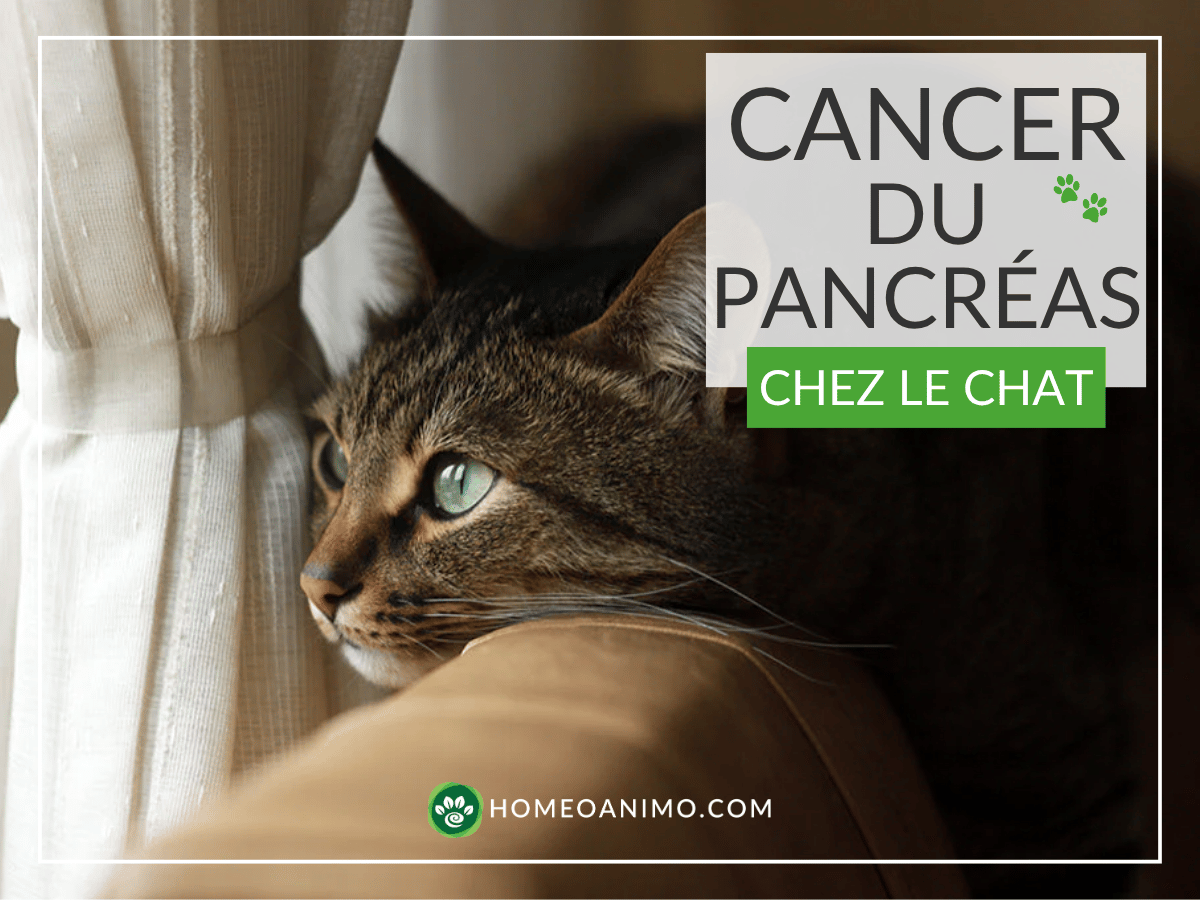
Your cat's pancreas is a small, vital organ located near the stomach, responsible for digestion and blood sugar regulation. Learning that it is affected by a tumor is an immense shock. Whether your cat has just been diagnosed with
At HomeoAnimo™, our team of animal health experts with over 20 years of experience understands this distress. Our mission is to help you better understand this complex pathology and discover gentle solutions to support your feline companion, without heavy side effects.
In this article, we will explore in detail the causes, indicative symptoms,
If you have questions about other types of tumors, consult our complete guide to cancer in cats.
Summary
- 1. What are the causes of pancreatic cancer in cats?
- 2. Exocrine or Endocrine: Types of Pancreatic Tumors
- 3. What are the symptoms of a pancreatic tumor?
- 4. How is pancreatic cancer diagnosed?
- 5. What are the appropriate veterinary treatments?
- 6. Dietary Aid: The Crucial Role of the Owner
- 7. Prognosis and Life Expectancy of Affected Cats
- 8. FAQ
- 9. Conclusion
- 10. External Sources
1. What are the causes of pancreatic cancer in cats?

The exact causes of feline pancreatic cancer remain unclear to veterinary medicine. However, it is strongly suspected that chronic inflammation, such as recurrent pancreatitis, may create an environment conducive to cellular mutations. Environmental factors, genetics, and aging also play a role. This cancer is generally diagnosed in cats over 9 to 10 years old. Furthermore, as VCA Animal Hospitals specialists point out, these tumors seem more frequent in Siamese cats and male cats. Cats with diabetes mellitus may also present an acquired risk.
2. Exocrine or endocrine: types of pancreatic tumors

It is essential to distinguish between the two main categories of tumors affecting the pancreas:
- Exocrine tumors (Adenocarcinoma): These are the most common. They develop in the tissues responsible for producing digestive enzymes. They are known to be aggressive and metastasize quickly to the liver or lungs.
- Endocrine tumors (Insulinoma): Rarer in cats, they affect the insulin-producing cells (islets of Langerhans), leading to insulin overproduction and severe hypoglycemic crises.
3. What are the symptoms of a pancreatic tumor?
Clinical signs of exocrine tumors (Adenocarcinomas)
According to VCA Animal Hospitals specialists, these tumors disrupt digestion:
- Rapid weight loss: Maldigestion leads to weight loss, even if the cat continues to eat at first.
- Chronic vomiting and diarrhea: Related to the inability to properly digest fats.
- Abdominal pain: The cat often adopts a "prayer" posture to relieve pressure.
- Jaundice: Yellowing of the eyes if the tumor obstructs the bile duct.
Clinical signs of endocrine tumors (Insulinomas)
According to Veterinary Partner, the symptoms here are directly linked to dramatic drops in blood sugar levels (hypoglycemia):
- Extreme weakness and lethargy: The cat suddenly appears exhausted.
- Ataxia and disorientation: Loss of balance and unsteady gait.
- Tremors and seizures: In cases of severe hypoglycemia.
4. How is pancreatic cancer diagnosed?
Diagnosis is challenging because the symptoms mimic those of simple pancreatitis. The veterinarian will perform blood tests (including the fPLI test for adenocarcinoma, or insulin/glucose measurement for insulinoma). A targeted abdominal ultrasound is the preferred tool for detecting a mass. However, a definitive diagnosis requires a biopsy.
5. What are the appropriate veterinary treatments?

Treatment options vary greatly depending on whether the tumor is exocrine or endocrine:
Treatments for exocrine tumors (Adenocarcinomas)
- Palliative care: This is often the preferred approach. It aims to provide the best possible quality of life through powerful pain relievers, anti-nausea medications, and appetite stimulants.
- Surgery: Extremely complex due to the location of the pancreas, it is rarely curative for these very aggressive tumors.
- Chemotherapy: Unfortunately, this type of cancer is often very resistant to it.
Treatments for endocrine tumors (Insulinomas)
- Surgery: Removal of nodules (partial pancreatectomy) is often more feasible and offers better results for stabilizing the cat.
- Medical management: The use of corticosteroids (such as prednisolone) to stimulate glucose production by the liver and counteract hypoglycemia.
6. Dietary aid: The crucial role of the owner

As PetMD points out, through an adapted diet, "you may be able to minimize the amount of medication or the need for additional treatments." Indeed, your daily action through the food bowl is one of the pillars of supportive treatment:
- In case of adenocarcinoma: Since the pancreas no longer produces its enzymes correctly, offer a highly digestible, very low-fat, and high-quality protein diet. Pancreatic enzyme and vitamin B12 supplements may be prescribed to aid absorption.
- In case of insulinoma: The goal is to avoid sugar spikes and drops. Opt for small, frequent meals (4 to 6 times a day). The food should be rich in protein and healthy fats, but strictly low in carbohydrates (sugars) to avoid further stimulating insulin production.
7. Prognosis and life expectancy of affected cats
For a pancreatic adenocarcinoma, the prognosis is unfortunately grim. Since the disease is generally discovered at a very advanced stage, life expectancy is often measured in weeks or a few months. For an insulinoma, if surgery is possible and medical management is strict, the cat can hope for prolonged survival of several months to over a year with a good quality of life. The main objective always remains to ensure optimal comfort for the animal.

8. Frequently Asked Questions (FAQ)
Is pancreatic cancer painful for cats?
Yes, pancreatic inflammation and tumor growth create abdominal distension and pressure that are painful. Administering painkillers prescribed by the veterinarian is an absolute priority.
What treats can I give my cat with pancreatic cancer?
Limit treats. Ask your veterinarian for advice, but prioritize small bites of lean boiled meat (like skinless chicken). Absolutely avoid any fatty or sugary foods.
Is pancreatic cancer contagious?
No. It is an internal cellular mutation specific to the animal. There is no risk of transmission to your other pets or humans.
9. Conclusion
Going through the ordeal of pancreatic cancer with your cat is incredibly difficult. Every day counts, and the priority remains your pet's well-being and comfort. If you need personalized advice, our team and experts are here to guide you. Feel free to request your Free Animal Health Recommendation for tailored support.
10. External Sources and References
- Feline Pancreatitis - Cornell University Feline Health Center.
- Pancreatic Cancer in Cats - PetMD.
- Pancreatic Tumors - VCA Animal Hospitals.
- Insulinoma in Dogs and Cats - Veterinary Partner.









2 comments
Bonjour Mme Bronsart, nous allons vous contacter par émail pour vous aider.
Homeoanimo
Bonsoir
J ai entendu parler de votre gamme de médicaments homéopathiques qui ne sont malheureusement pas disponibles en pharmacie parce que je ne sais payer que dans des magasins. Je suis triste car votre gamme est bonne.
Bronsart colette
Leave a comment
This site is protected by hCaptcha and the hCaptcha Privacy Policy and Terms of Service apply.